


Inside the Training of an Olympic Push Athlete

People assume Olympic athletes train differently because they are genetically special. Some of that is true. The physical tools at the elite level are real. The training itself is more systematic and less mysterious than most people think. It is the same principles applied with more precision, more consistency, and higher stakes.
Here is what a bobsled push athlete training block actually looks like and why it matters for how we train athletes at Güd.
The Foundation Is Still Strength
At the elite level, push athletes are moving serious weight in the gym. Heavy deadlifts, heavy squats, heavy single leg work. The strength base has to be there before any of the explosive and sprint work means anything.
This is the part that surprises people. They expect elite speed athletes to be doing mostly speed work. The weight room is the foundation. It is not supplementary. An Olympic push athlete who cannot deadlift strong relative to their bodyweight is not competitive. Full stop.
Sprint Work Is Short and Tracked
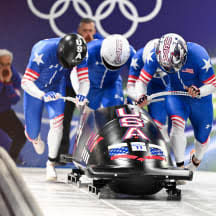
Push athletes do not run long distances. They sprint ten to thirty meters with full recovery between every single rep. Every sprint gets timed. Every session gets compared to the last. The feedback is immediate and the standard is clear.
There is no gray area. You either ran faster or you did not. That culture of measurement keeps training honest in a way that general conditioning programs never do. You cannot fake a sprint time.
The Mental Pressure Is Real
Push trials for national bobsled teams come down to a handful of timed pushes. Your entire selection depends on what you do in those moments. The athletes who handle that pressure best are almost always the ones who have trained with purpose rather than just effort. They have been measuring themselves against a standard for months. The trial is not a surprise. It is just another data point.
That is the mental framework we try to build at Güd. The competition should feel familiar. If you have been tracking your numbers honestly in training, you already know where you stand.
What It Looks Like at Güd
We apply the same principles here. Strength first, sprint work tracked, recovery managed, standards clear. You do not need to be training for the Olympics for that approach to work. Every athlete at every level gets better when the training is that intentional.
Keep Pushing.
Comments