


Acceleration is King in All Sports. Here is How to Enhance it.
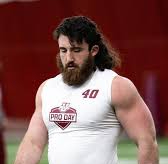
One of the staples in our athlete training, especially during field work, is the sled push contrasted with a 10 to 15 yard sprint.
No matter the sport, acceleration matters. If an athlete can get out of their stance and accelerate through the first 10 yards, they are going to benefit. Football, lacrosse, baseball, soccer, it does not matter. The first few steps decide a lot of plays.
I also like using the 10 yard sprint as a simple test for athletes. It tells you a lot about their starting strength and acceleration ability.
The fastest 10 yard start we have ever recorded on our lasers is 1.48 seconds. That is moving. But it took a long time and a lot of training to get there.
How We Progress It
The progression of the sled push and 10 yard sprint depends on how long the athlete’s training block is.
Every training block starts the same way. We establish a baseline.
Athletes run three 10 yard sprints with no sled and we log the times. This gives us something to measure against as the training block goes on.
From there we start introducing the sled work.
Some athletes actually benefit more from a sled pull instead of a sled push, depending on their sprint mechanics. But the concept stays the same.
At the start of the training phase we use lighter sled pushes in the three to five rep range. Each week we gradually increase the load and sometimes the total number of reps.
Eventually we build up to pushing a pretty heavy sled for seven to ten reps.
The important part is tracking sprint times every week. Once you start seeing sprint numbers drop off, that is usually a sign that the athlete is getting fatigued and it is time to deload.
During a deload week we remove the sled completely and just run 10 yard sprints. It also gives us a good midpoint test to see where the athlete is at and what we might want to adjust moving forward.
Loading the Sled
One guideline we follow is not exceeding about 1.5 times bodyweight on the sled.
For example, my brother weighs around 300 pounds and was pushing a sled around 330 pounds. One of our receivers who weighs about 190 pounds saw really good progress pushing a sled around 240 pounds.
People always ask why don't we just keep loading it heavier.
The answer is simple. You can go heavier, but it usually does not produce better results for acceleration.
We actually tested this. At one point we loaded my 300 pound brother with a 550 pound sled. That is great for building strength, especially for a lineman who has to move heavy people around. But when we contrasted that with sprint work, it did not improve acceleration the way lighter loads did.
The goal here is not just moving the heaviest sled possible. The goal is improving speed.
The basic setup is simple:
Push the sled for 10 yards. Walk over to the sprint start. Rest about 30 seconds.Sprint.
What Athletes Usually Experience
Around week three or four, athletes usually start saying the same thing.
"I feel like I am getting slower."
Sometimes the numbers will look that way too. Sprint times might be similar to the baseline, or even a little slower.
That is normal.
Pushing a heavy sled and then sprinting right after is hard. It is taxing and it builds fatigue. When we start seeing that fatigue show up in the numbers, it is usually a sign that a deload week is coming soon.
Once the sled is removed and athletes are just sprinting again, the times usually start dropping.
Another question we get a lot is what happens if an athlete does not have access to a sled at school or on testing day.
That is fine.
The whole point of this training is to bring the athlete’s average 10 yard time down. The sled is just a tool that helps get us there faster.
Example: 10 Yard Progression
Here is an example from one of our athletes.
Nolan O’Brien
Baseline 1.78
Week 1: (sled contrast)1.75, 1.77, 1.71, 1.73
Week 2: 1.72, 1.75, 1.69, 1.69, 1.71
Week 3: 1.66, 1.63, 1.70, 1.68, 1.67, 1.72
Week 4: 1.59, 1.62, 1.58, 1.65, 1.66, 1.68, 1.63
Week 5: 1.68, 1.75, 1.66, 1.79, 1.66, 1.68, 1.69
Week 6: (deload)1.59, 1.62, 1.62, 1.59, 1.64, 1.60
Week 7: 1.57, 1.54, 1.62, 1.60, 1.59, 1.60
Week 8: 1.55, 1.61, 1.61, 1.59, 1.57, 1.56, 1.59
Week 9: 1.65, 1.71, 1.72, 1.68, 1.77, 1.65
Week 10: 1.55, 1.51, 1.52, 1.53, 1.57, 1.58, 1.57
Week 11: (no sled)1.51, 1.50, 1.48, 1.50, 1.51
It was not perfectly linear, but over time the average came down.
Final Thoughts
Not every athlete is going to drop their 10 yard time by three tenths of a second. That is just not how training works.
As coaches, our job is to provide the structure, the programming, and the environment.
What the athlete does with that is up to them.
The athletes who make the biggest improvements are usually the ones who buy in the most. They take recovery seriously. They stretch. They eat well. They ask questions. They make every rep count.
Create a strong culture. Hold athletes accountable. Teach good sprint mechanics and good shin angles. Build a community where people want to work hard.
If you do those things consistently, the results tend to take care of themselves.


Comments